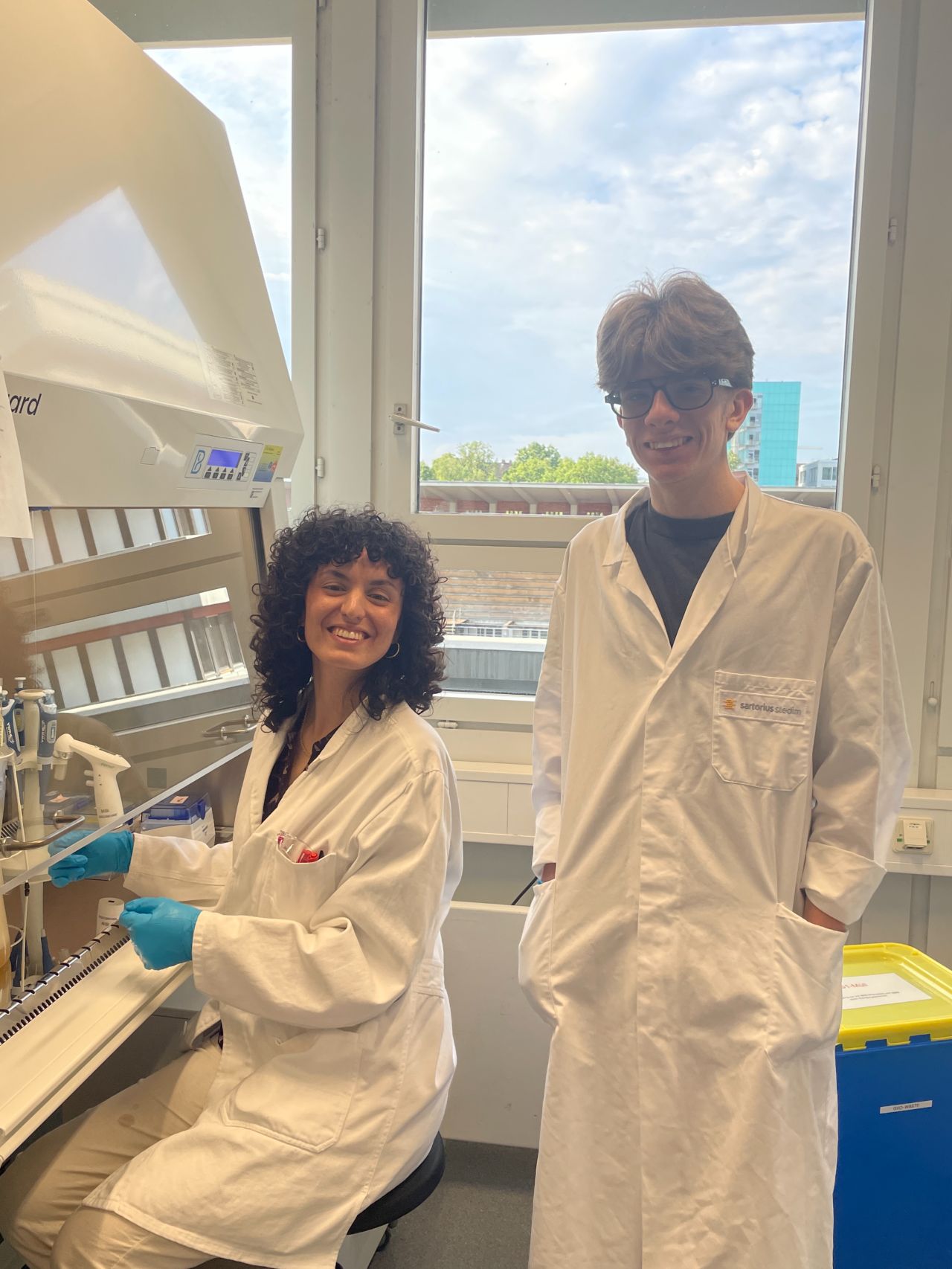
Public engagement and outreach are as much a part of the CAARE doctoral network as the research itself. A recent example: CAARE doctoral candidate Giulia Polazzo, hosted at Karlsruhe Institute of Technology (KIT), supervised a two-week work experience placement for an Italian high-school student who had just completed his third year of secondary school.
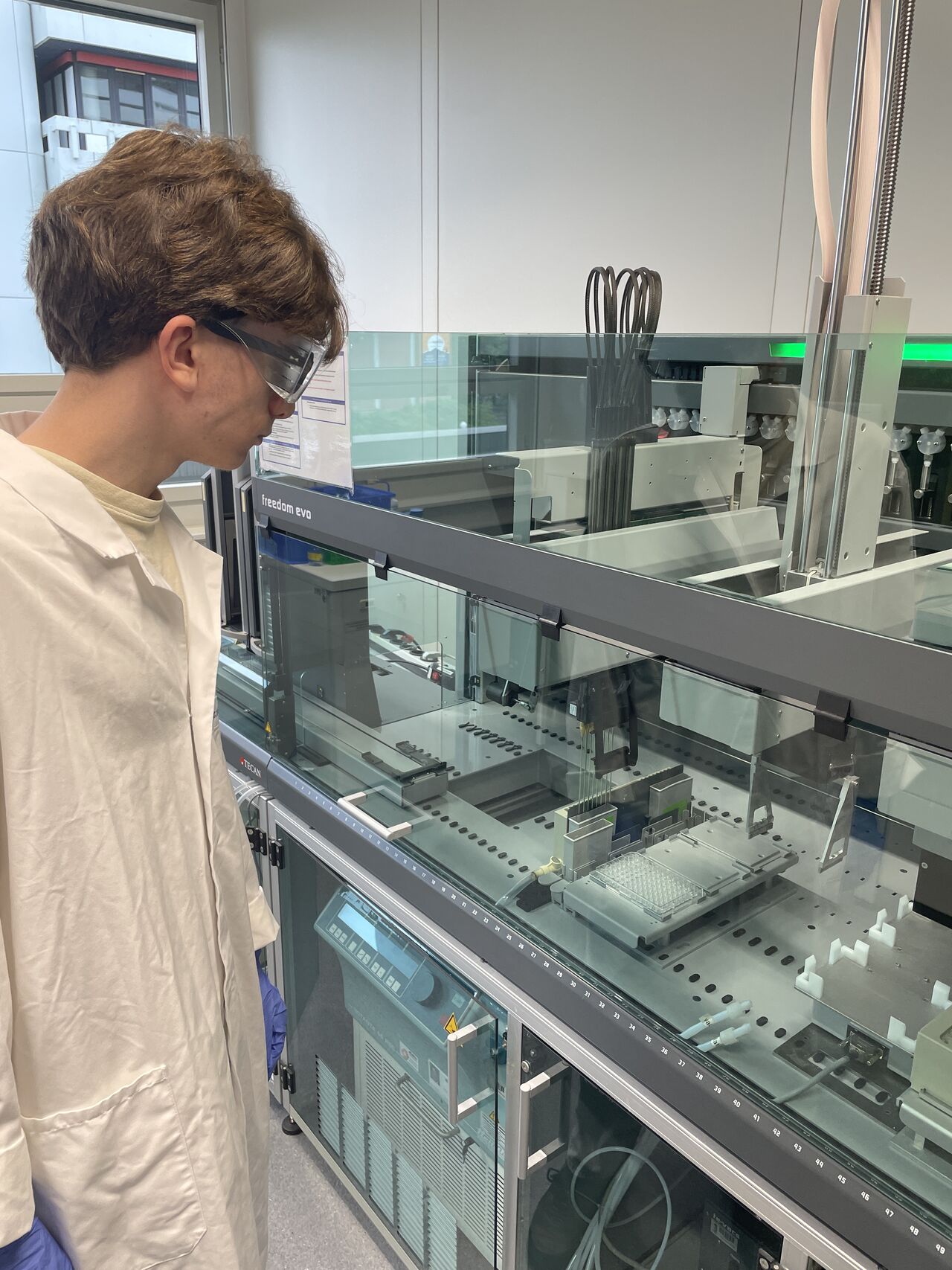
Over the two weeks, the student gained hands-on exposure to a real bioprocessing workflow, following a bioproduct from cultivation through to final analysis. He worked with E. coli cultivation and protein precipitation, moved on to aqueous two-phase systems (ATPS) and liquid-handling automation, and finished with size-exclusion chromatography (SEC) — covering the core stages of cultivation, separation, purification, and analysis that make up a typical downstream process.
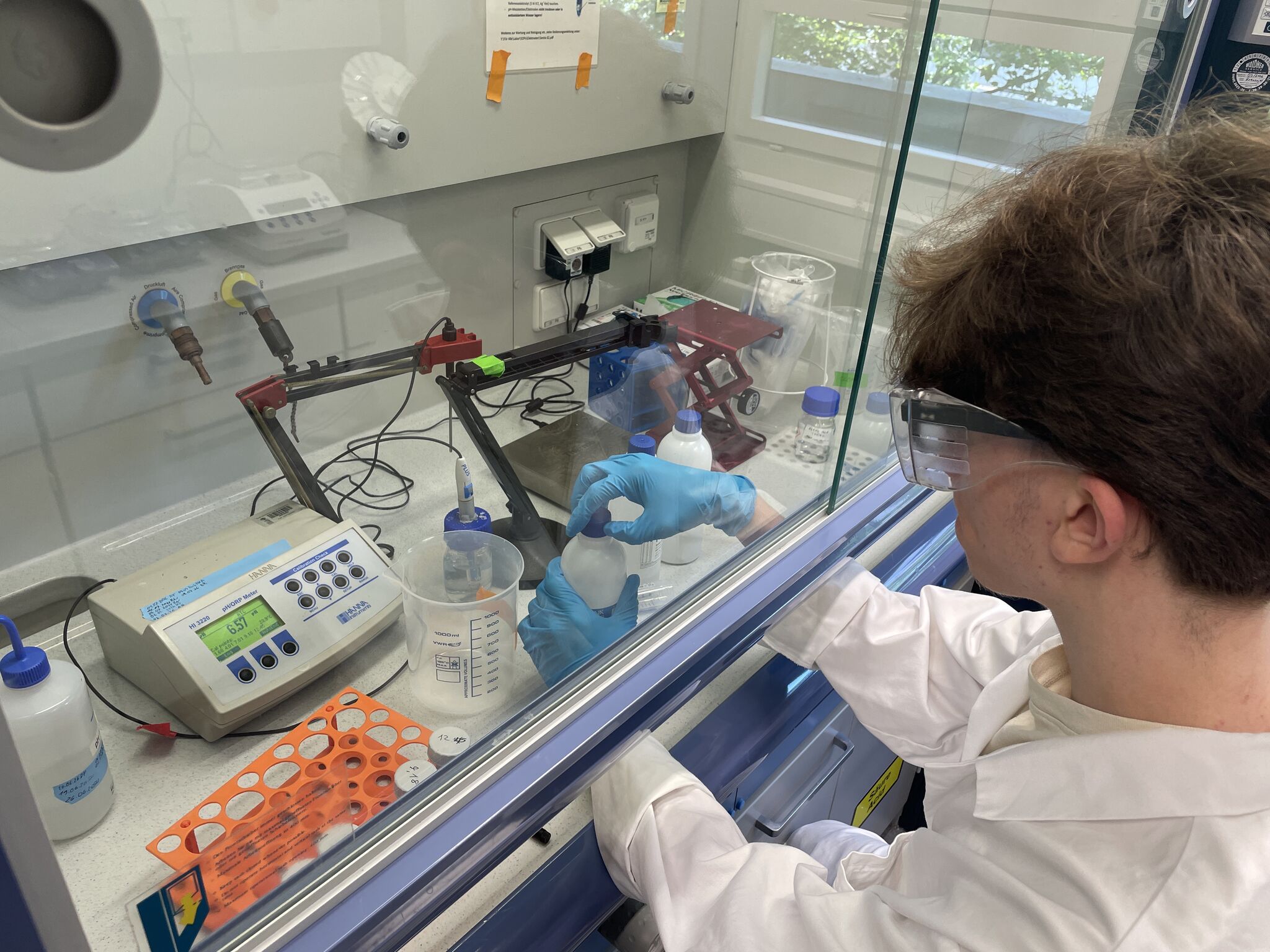
Alongside the technical workflow, he also picked up the everyday skills of working in a research lab: pipetting, sample preparation, careful documentation, and lab safety practices. The placement concluded with a short presentation, in which he shared what he had learned and experienced with the group.
For CAARE, hosting placements like this is a rewarding way to share the network’s passion for research with young students and spark early curiosity for science and biotechnology — a small but meaningful step in connecting secondary education with the world of academic research.
Congratulations to Giulia on supervising a successful placement, and well done to a motivated young scientist — good luck for what comes next!