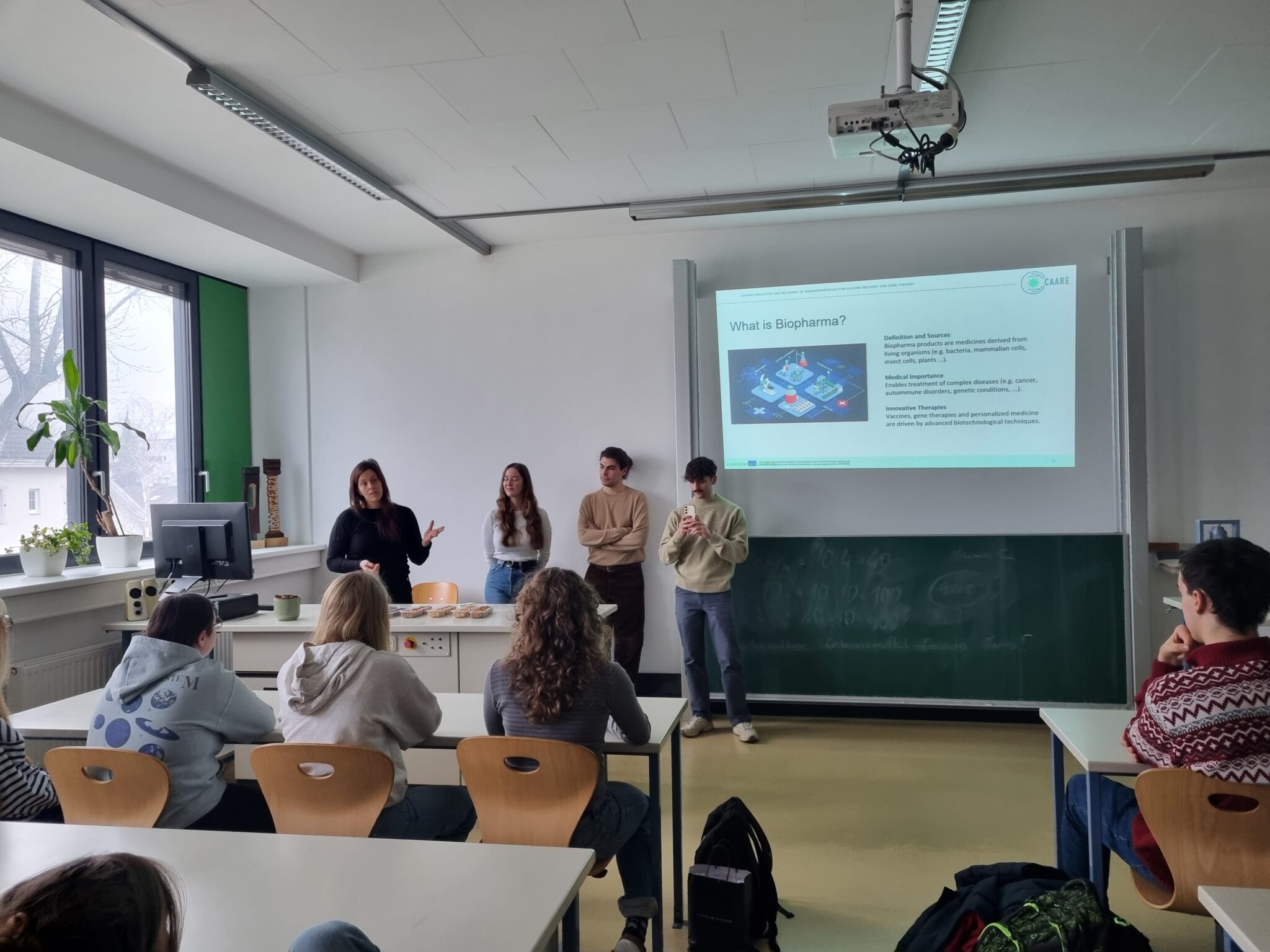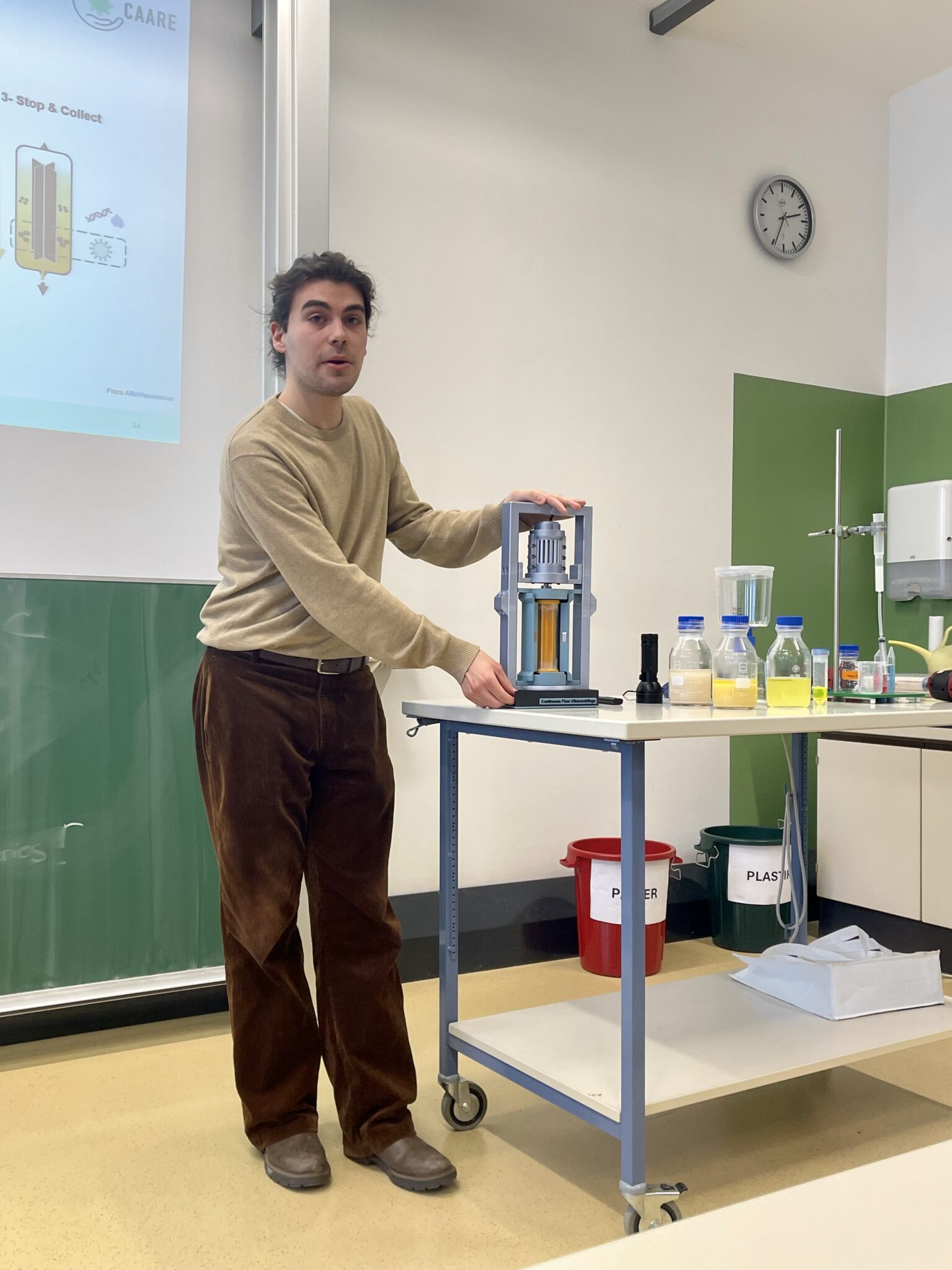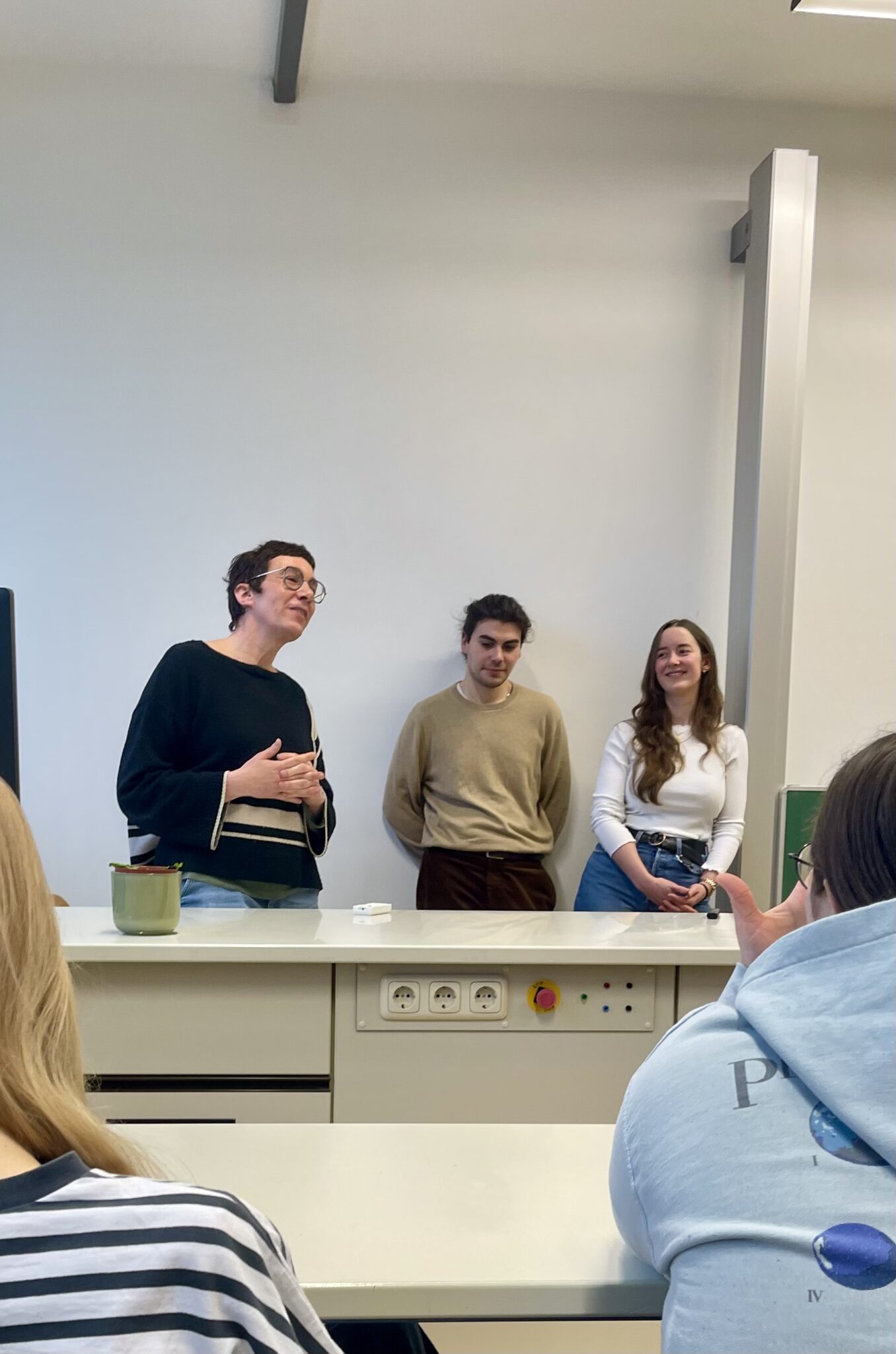
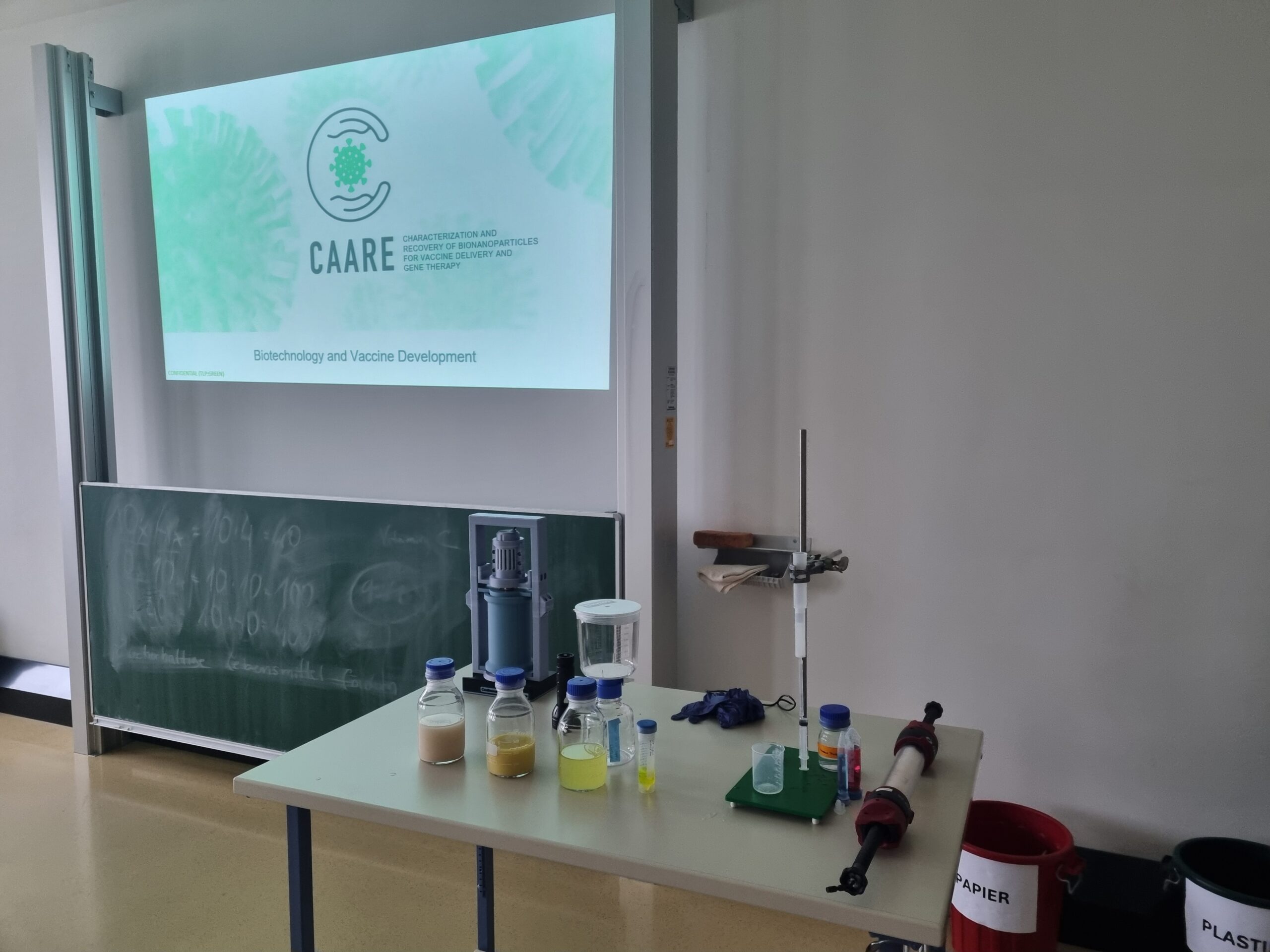
On 21 January 2026, the CAARE Doctoral Network visited the Gymnasium Neusiedl/See to host an interactive workshop on biotechnology, vaccines, and modern biopharmaceutical production. For two hours, pupils from Andrea Horvath’s advanced biology class explored how medicines, vaccines, and cutting‑edge therapies are developed — from cells to purification.
The workshop was led by CAARE researchers from the Austrian Centre of Industrial Biotechnology (acib):
- Patricia Pereira Aguilar
- Verena Beck
- Finja Probst
- Markus Mozgovicz
- Guilherme Fereira Costa
Their presentations covered a wide range of topics drawn from current CAARE research, including:
What is Biotechnology?
Students learned how living cells, enzymes and microorganisms are used to produce medicines, sustainable materials, and essential everyday products. They explored the different “colors” of biotechnology — from green (agriculture) to red (medical applications) — and discovered why biotechnology is considered a key enabling technology for Europe’s future.
Vaccines & Gene Therapy
The team explained how vaccines train the immune system, how different vaccine types work (from mRNA to viral vectors), and how gene therapy can correct faulty genes. Animations, illustrations and hands‑on explanations made complex concepts easy to understand.
How Are Modern Medicines Produced?
Using examples from their own PhD projects, the researchers demonstrated central bioprocess steps such as:
- Cell cultivation in flasks and bioreactors
- Transfection and viral particle production
- Clarification, chromatography, and ultracentrifugation
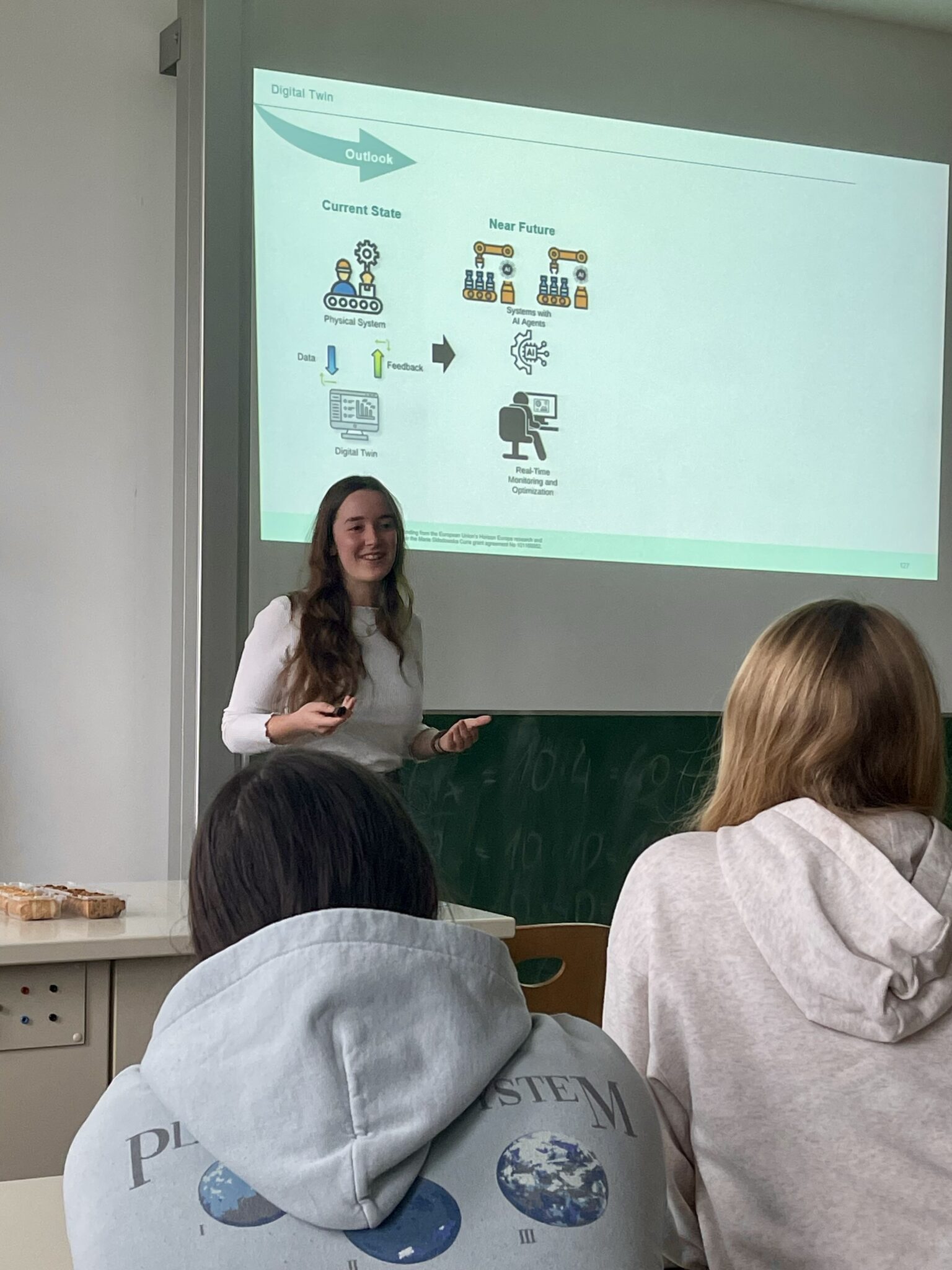
- Digital Twins and how computational models help optimize bioprocesses
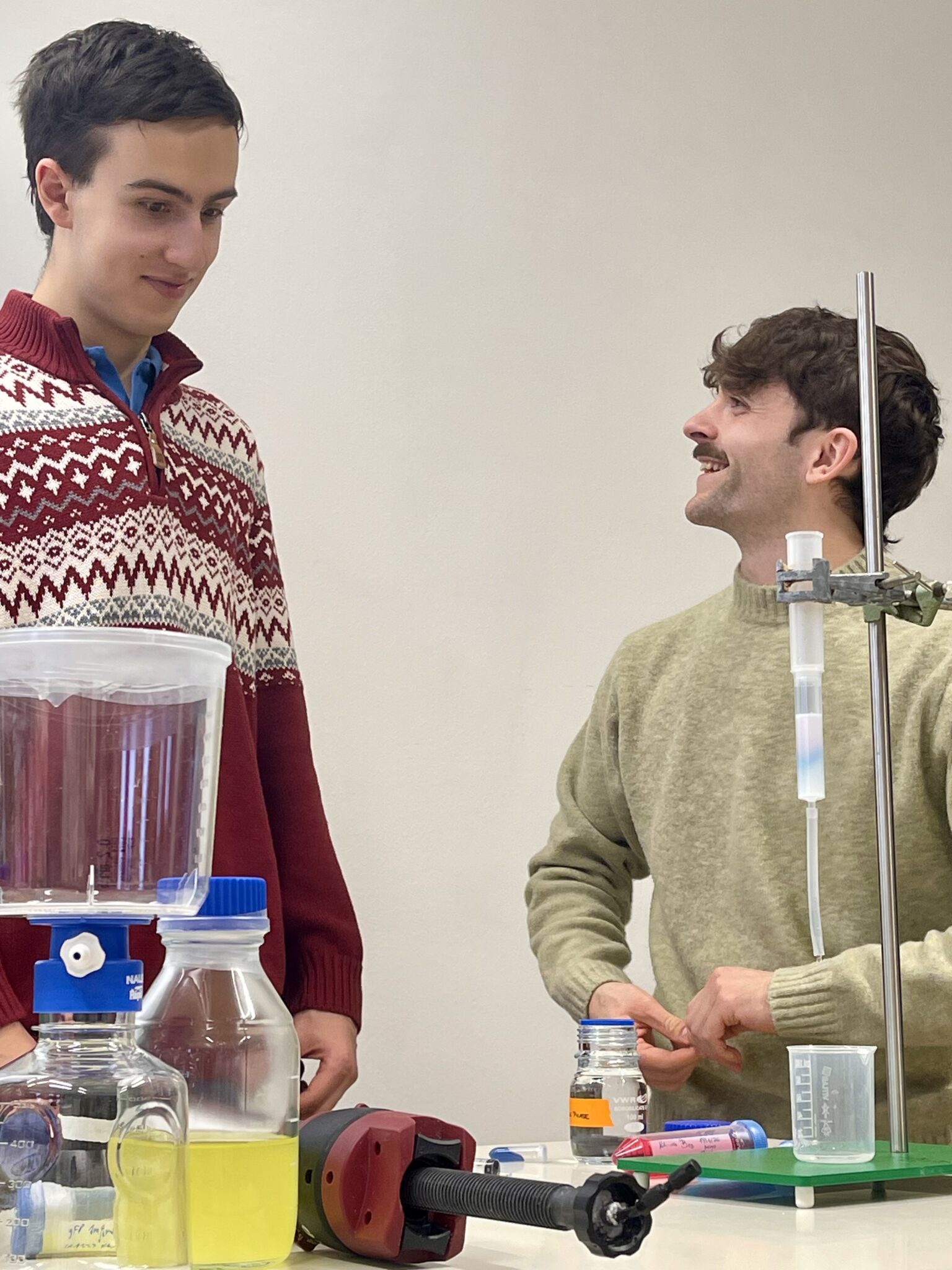
- Chromatography principles explained through playful analogies like “making lemonade”
This gave pupils a realistic look into the world of biomanufacturing — from laboratory research all the way to industrial‑scale processes.
Career Paths in Biotechnology
The students also received insights into study options, international research careers, and what it means to work in an EU‑funded Doctoral Network such as CAARE.
A big thank you
We warmly thank Andrea Horvath for hosting us and her class for the great curiosity, clever questions, and enthusiasm throughout the workshop. Their interest and engagement made the afternoon truly inspiring for our team.
Pictures: Verena Beck, acib